
eran

درباره سایت
آخرین مطالب
- House of Khomeini and Mass Executions of 88
- Iran Green Movement leaders under house arrest; more than 2000 days
- Iran executed a nuclear scientist who allegedly defected to the US
- Execution of Suis; Al-Qaeda Suis and Al-Qaeda Shias
- Execution of Suis; Al-Qaeda Suis and Al-Qaeda Shias
- Audio file released: IRI involvement in mass execution of 4000 political prisoners in Iran
- Shahram Amiri, Iranian nuclear scientist, executed in Iran
- Iranian Sui cleric: execution of Suis will have negative consequences
- Iran is not releasing the names of the Sui Kurds executed
- UN Human Rights Commissioner condemns the executions of Sui Kurds in Iran
امکانات وب
Shahram Amiri, the Iranian nuclear scientist who disappeared from Iran in 2009, later on claiming that he was kidnapped, tortured and bribed to cooperate with the CIA on revealing Iranian nuclear secrets was covertly executed in Iran.
Shahram Amiri recived a hero’s welcome upon retu to Iran in 2010 from the US.
Marziyeh Amiri, Shahram’s mother has confirmed the execution on 6 Aug, speaking to a number Persian media. She says her son was executed on 3 Aug at an undisclosed location.
Amiri’s mother confirms that she has identified her son’s body with visible ligature mark around his neck indicating that he was hung.
Iranian authorities have not yet confirmed this news.
In 2010 Amiri first claimed that he went to the United States to continue his education in physics. Later he claimed that in the spring of 2009, he was on a pilgrimage to Muslim holy sites in Saudi Arabia when CI
برچسب: iran has executed a woman,iran executed saturday a 26,year,old woman,
نویسنده: استخدام کار
by: Ehsan Mehrabi
On 2 Aug 2016 a number of Sui prisoners in Rejaishahr Prison in Karaj were hanged for charges ranging from acting against national security, propaganda against the regime, membership in Salafai groups, corruption on earth and enmity against God. The executions triggered Ehsan Mehrabi, Iranian joualist based in Germany, to recall his year in prison following the 2009 election protests in Iran and his encounters with Sui prisoners accused of links to Al-Qaeda.
Ehsan Mehrabi – When Islamic Republic authorities aounced the arrest of a number of alleged Iranian members of Da’esh (ISIS), I was immediately intrigued to lea more about them because as a former political prisoners I had come to meet a number of Iranians imprisoned on charges of collaboration with Al-Qaeda.
One of my former cellmates, who was informed about the latest arrest, summarized the answer t
برچسب: execution of suis in iran,
نویسنده: استخدام کار
by: Ehsan Mehrabi
On 2 Aug 2016 a number of Sui prisoners in Rejaishahr Prison in Karaj were hanged for charges ranging from acting against national security, propaganda against the regime, membership in Salafai groups, corruption on earth and enmity against God. The executions triggered Ehsan Mehrabi, Iranian joualist based in Germany, to recall his year in prison following the 2009 election protests in Iran and his encounters with Sui prisoners accused of links to Al-Qaeda.
Ehsan Mehrabi – When Islamic Republic authorities aounced the arrest of a number of alleged Iranian members of Da’esh (ISIS), I was immediately intrigued to lea more about them because as a former political prisoners I had come to meet a number of Iranians imprisoned on charges of collaboration with Al-Qaeda.
One of my former cellmates, who was informed about the latest arrest, summarized the answer to my query saying: “They are exactly like the ‘Al-Qaeda prisoners’.”
In the years following
برچسب: execution of suis in iran,
نویسنده: استخدام کار
In 1988, the Islamic Republic of Iran (IRI) executed at least 4000 political prisoners. IRI has never acknowledged these executions, nor provided any information as to how many prisoners were killed.
Ayatollah Hossein Ali Montazeri
On 9 Aug 2016, the house of ayatollah Hossein Ali Montazeri, a high-ranking political and religious cleric and jurist who passed in 2009 has released a audio file for the first time revealing the conversations of the late ayatollah with a number of high ranking officials in the Islamic Republic regime that all played key roles in the mass execution of political prisoners in Iran in the year 1988.
The file is an audio conversation that is taking place in 1988 when ayatollah Hossein Ali Montazeri was named to succeed Ayatollah Khomeini, as the future leader of the Islamic Republic. Montazeri has called to his house members of what the public came to call the “death commission”( Heya’t Marg) – a special commission for the 1988 state-sponsored executio
برچسب:
نویسنده: استخدام کار
Shahram Amiri, the Iranian nuclear scientist who disappeared from Iran in 2009, later on claiming that he was kidnapped, tortured and bribed to cooperate with the CIA on revealing Iranian nuclear secrets was covertly executed in Iran.
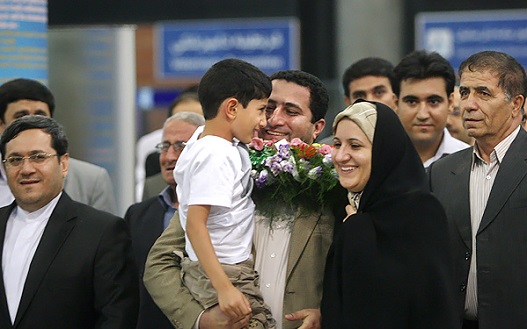
Shahram Amiri recived a hero’s welcome upon retu to Iran in 2010 from the US.
Marziyeh Amiri, Shahram’s mother has confirmed the execution on 6 Aug, speaking to a number Persian media. She says her son was executed on 3 Aug at an undisclosed location.
Amiri’s mother confirms that she has identified her son’s body with visible ligature mark around his neck indicating that he was hung.
Iranian authorities have not yet confirmed this news.
In 2010 Amiri first claimed that he went to the United States to continue his education in physics. Later he claimed that in the spring of 2009, he was on a pilgrimage to Muslim holy sites in Saudi Arabia when CIA kidnapped him.
In July 2010, Shahram Amiri went to the Iran interests section of the Embassy of Pakistan in Washington DC asking for help. He wanted to retu to Tehran and claimed that he was being kept against his will.
US sources have confirmed that he has cooperated with the CIA but have maintained that Amiri was never kept against his will.
According to the US officials, Amiri “wanted out of Iran” but later on changed his mind.
Upon his retu to Iran Amiri received a hero’s welcome. He then appeared on a number of state television programs and maintained that he was kidnapped by CIA while in Saudi soil.
Amiri’s family is saying that for four month after retu to Iran, Mr. Amiri was held in a safe house and his family visited him at a public venue in northe Tehran two time.
After that Amiri was transferred to solitary confinement with no news on possible charges that were brought against him.
According to Amiri’s mother he was never sentenced to the death penalty but was charged with espionage related offences and sentenced to 10 years in prison.
برچسب:
نویسنده: استخدام کار
Molavi Abdolhamid, the leader of the Baluchi Sui minority in Zahedan province in Iran has raised his conce about the execution of 20 Sui religious activists.

Molavi Abdolhamid
On 5 Aug, Abdolhamid, the Sui Friday prayer Imam of city of Zahidan in southe Iran, said that the recent execution of Sui prisoners in Iran “shows lack of foresight.”
He raised conce that the executions were unfair and urged the families of those executed to keep their calm.
20 Kurdish Sui activist who were Shafi’i religious activists were executed on 2 Aug 2016 in Rajai Shahr prison in Karaj, Iran.
Those executed were all religious activists or affiliates to Shafi’i Suis from the Kurdish community.
The Islamic republic authorities are saying that the group that were executed were members of Salafi movement; an allegation that many of the Sui prisoners have denied.
Molavi Abdolhamid has waed the central govement in Tehran of sectarian tensions and has said that the execution of the Suis will have negative consequences.
The Baluchi Friday prayer Imam who rarely confronts the central govement in Tehran has raised conces that the enemies of the state especially the hegemonic powers will abuse the news and will take advantage.
Those executed were mostly Kurdish. Suis are the largest minority group in Iran. About 9%of the Iranian population are Sui Muslims—from Larestan, Kurdistan, Balochistan, the Arab populations in the south and the Turkman populations in the northeast Iran.
برچسب:
نویسنده: استخدام کار
The Inteational Campaign for Human Rights in Iran has called upon the Iranian authorities to release the names of the Sui Kurds executed in Iran on 2 Aug 2016.

Sui prisoners pray in Rajai Shahr prison, many of them have been executed now
Iran is withholding the names of Sui prisoners who were hanged in Iran. Iran’s prosecutor general and the Intelligence Ministry have both made statements confirming that at least 20 people have been executed.
The Islamic republic authorities are saying that the group that were executed were members of Salafi group called “Tawhid va Jihad”; an allegation that many of the Sui prisoners have denied prior to their execution.
Zeid Ra’ad Al Hussein, the United Nation commissioner for human rights has condemned the executions saying that the charges laid against the Sui religious activists were “overly broad and vague”.
He also says that the accused did not have the right to a fair trial and were forced to confess possibly under torture.
Mowlavi Abdulhamid, the Baluchi Sui Imam in Iran has also raised conces about increasing sectarian tensions following the executions.
Those executed were all religious activists or affiliates to Shafi’i Suis from the Kurdish community.
The Inteational Campaign for Human Rights in Iran has confirmed the names of ten of the victims who were hung: Bahman Rahimi, Mokhtar Rahimi, Yavar Rahimi, Arash Sharifi, Kaveh Oveisi, Kaveh Sharifi, Ahmad Nasiri, Behrouz Shahnazari, Taleb Maleki and Shahram Ahmadi.
Campaign sources have also verified the names of Omid Mahmoudi, Mohammad Gharibi, Kayvan Momenifard, Varia Ghaderi, Hekmat Araghi, Hamzeh Araghi and Ali Araghi to be among those executed but the Islamic Republic authorities have not yet confirmed this.
Among those executed is also Shahram Ahmadi, a prisoner whose death penalty case was subject of a social media campaign with hashtag #FreeShahram.
Ahmadi was allegedly arrested after distributing leaflets demanding rights for the Sui minority population in Iran during a 2009 visit of Ali Khamenei to Kurdistan.
The 2009 visit of Islamic Republic leader to Kurdistan was highly publicised and after this visit a number of Sui religious activists were arrested by local security forces.
Ahmadi in an interview with Zamaneh said that he was forced to confess under tortured. The Islamic Republic has in the past coerced many political prisoners to make false confessions.
Ahmadi was denied the right to see his family prior to his execution. His relatives were initially asked to go to Rajai Shahr prison to visit him but then later on were directed to the cemetery where he was due to be buried near Tehran.
برچسب:
نویسنده: استخدام کار
Zeid Ra’ad Al Hussein, the United Nation commissioner for human rights on 5 August condemned the execution of 20 Sui Kurds in Rajai Shahr prison in Karaj Tehran.

Zeid Ra’ad Al Hussein has said there are “serious doubts about the faiess of the trials”.
20 people were executed in Iran this week for alleged “terrorism-related” offences.
The commissioner says these charges are “overly broad and vague”. He also says that the accused did not have the right to a fair trial and were forced to confess possibly under torture.
Those executed were all religious activists or affiliates to Shafi’i Suis from the Kurdish community. The Islamic republic authorities are saying that the group that were executed were members of Salafi movement; an allegation that many of those executed have denied.
“In many of the cases, there were serious doubts about the faiess of the trials,” Zeid Ra’ad Al Hussein says.
The commissioner also names Shahram Ahmadi, a prisoner whose death penalty case was subject of a social media campaign with hashtag #FreeShahram.
Ahmadi was allegedly arrested after distributing leaflets demanding rights for the Sui minority population in Iran during a 2009 visit of Ali Khamenei visit to Iran. The 2009 visit of Islamic Republic leader to Kurdistan was highly publicised and after this visit a number of Sui religious activists were arrested by local security forces.
Ahmadi was denied the right to see his family prior to his execution. His relatives were initially asked to go to Rajai Shahr prison to visit him but then later on were directed to the cemetery where he was due to be buried near Tehran.
The High Commissioner has also raised conce about the execution Hassan Afshar who was hanged when he was 19 for a crime he was accused of when 17. Afshar was accused of rape when he was 17 and later on received the death penalty. He was hanged last month in Iran.
The execution of juvenile offenders in Iran is a major conce for the human rights defenders. Mr. Zeid urged Iran to respect the strict prohibition under inteational human rights law against this practice.
برچسب:
نویسنده: استخدام کار
Iran’s Cyber Police in Weste Azerbaijan reports that in the past four months 192 individuals were arrested for cyber crime charges.

Security forces officer, Colonel Hassan KourehBolaghi told reporters that currently the majority of cyber crimes are related to activities in social media.
ISNA reports that according to KourehBolaghi there has been over 80 percent increase in the number of cyber crimes in Weste Azerbaijan province compared to last year.
“Last year 102 individuals were arrested by the Cyber Police but there has been an 88 percent increase in arrests this year,” KourehBolaghi adds.
He goes on to say: “With the sudden proliferation of social media sites and new capabilities in virtual space, unlike former years where financial fraud topped the list of cyber crimes, now crimes relating to social media top the list. In the past two years, with the launch of Telegram more than half of the offences in this sector is related to the use of this app.”
KourehBolaghi identifies women as the most vulnerable target of cyber crimes saying: “Women are among the groups that are most affected by the crimes coected to social media through inconsistent content, hackers and posting of private photos.”
The report on ISNA indicates that financial fraud offences in cyber space are now overshadowed by social media crimes and describes these offences as mostly involving “online defamation and harassment”.
Fake gambling sites are another target of Iran’s Cyber Police investigations.
The ISNA report adds that with the approach of the Olympics, virtual space has become a hotbed of activity for “fake sites predicting the results of matches” and the authorities wa young people to be aware that these sites are not legitimate and their services are fraudulent.
Iranian authorities keep a close watch on inteet activity across the country and many popular sites such a Facebook and Twitter are blocked from direct access, only accessible through proxies. Meanwhile many inteet users have been arrested and given prison terms for posting content the govement deems inappropriate.
برچسب:
نویسنده: استخدام کار
by Assad Binakhahi
برچسب:
نویسنده: استخدام کار
Riot control guards have raided prison ward 4 associated with Sui prisoners on death row in Rajai Shahr prison in Karaj, Iran. The riot control police known as the Black Guards then cuffed 30 Sui prisoners and transferred them to an undisclosed location.
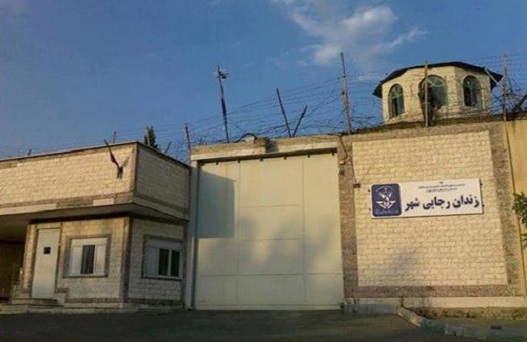
Rajai Shahr Prison where 36 Sui prisoners awaiting execution are being held
Human Rights Activists News Agency (HRANA) confirms that the Black Guards have raided prison ward 4 in Rajai Shahr in the afteoon of 1 Aug 2017. Antiriot guards then transferred the Sui prisoners outside of the ward. There are no reports on the whereabouts of these prisoners.
Most of these prisoners are the ones whose death sentence was finalized by the Supreme Court in Iran. They belong to the Sui minority groups in Iran, mostly Kurds, Arabs and Balouchis, who have been arrested on national security charges.
The guards stormed ward 4, blindfolding prisoners and cuffing their hand and leg. They then transferred them to outside of ward. Sources inside the prison could not confirm where the guards took the prisoners.
The Rajai Shahr prison has extended extra security measures and human rights groups fear that the 29 Sui prisoners whose death penalty verdict has been approved by the Supreme Court face imminent death.
The number of prisoners who have been escorted out of ward 4 is around 30 but sources inside prison could not confirm the exact number.
Inmates in Rajai Shahr have not been given outdoor breaks for exercise or smoking all day on 1 August 2016. The prison authorities are saying that no fresh air breaks are allowed because the prison is on high alert.

Shahram Ahmadi’s death sentence was finalized on 29 June, since then a #freeShahram campaign has started in social media
Before these inmates were transferred, there were a total 36 Sui prisoners of conscious in ward 4, hall 10, who have been given death sentences. Of them 29 sentences are final and have been approved by the judiciary’s Supreme Court. Seven of them have received death penalties but the final sentence has not yet been approved by the judiciary, a condition that finalizes any death penalty case in Iran and puts the inmate on the death row.
One of these prisoners who were taken by the guards is Shahram Ahmadi, which became a highly publicized case. He had appealed his sentence but on 29 June 2016, judiciary officials met with him in prison to inform him that his appeal was rejected and that he is now on death row.
Shahram Ahmadi’s appeal of the death penalty was based on evidence that showed he had not committed violent acts against the state or people and was not a member of any armed opposition group.
A social media campaign with the hashtag #SaveShahram has since been active to save his life. Ahmadi’s lawyer has been a vocal critique of the judiciary’s treatment of Sui prisoners arguing that in the case of Shahram Ahmadi the assumption that his client is a member of opposition group was the only evidence provided by the prosecutor to punish him to death. He is arguing that most cases are build based on state intelligence assumptions and not facts.
Before today’s raid, a forced confession program was run on national television in Iran that showed some of these prisoners confessing to crimes.
In the last week of July 2016, camera crew visited Rajai Shahr prison and filmed Sui prisoners in a ward that was cleaned up and staged. Prisoners who had been in prison for more than 8 years were then forced to confess on camera.
Forced televised confessions are common practice of Islamic Republic of Iran intelligences services. The confessions of the Sui prisoners of Rajai Shahr were aired with the title “Depth of Darkness” on state owned media.
The airing of the forced confessions paired with the transferring of Sui prisoners to an undisclosed location has put Iranian human rights groups on high alert about these prisoners who could be facing death imminently.
These Sui prisoners are sentenced to death on charges like propaganda against the state, membership in Salafi groups, membership in Kurdish militia groups, “corruption on the earth” which usually translate to taking up arms and or membership in armed opposition groups that fight for minority rights in the Shiite dominant Iran.
Most of these prisoners have been arrested between 2009 and 2010 in Kurdistan, and have been kept in solitary confinements for months before the trial, without any access to legal help.
برچسب:
نویسنده: استخدام کار
By Azam Bahrami
The Iranian constitution has concrete language prohibiting any form of development detrimental to the country’s environment. However, the large scale water transfer projects considered by the govement as remedies to the ongoing water shortage vows in various regions of the country have fallen short of showing concrete consideration of sustainable development.
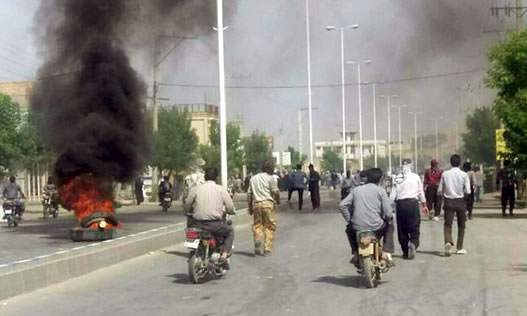
On July 16, 2016 the people of Boldaji, in Chahar Mahal Bakhtiyari staged protests to the water transfer project through tuels to Borojen
The administration has also failed to consult people who are most familiar with the history and atmospheric conditions of the regions affected with shortage of water to effect successful policymaking and this failure has become a source of insecurity, discrimination and chronic interprovincial disputes.
Caspian Sea water transfer to Semnan
With an estimated budget of 2-3 billion dollars (6 to 9 trillion toumans), the grand water transfer project from Caspian Sea to Semnan was controversial from its very conception by Mahmood Ahmadinejad’s administration. Despite some later indications by parliamentarians and reports of a budget to study the project, deputy head of the Centre for Strategic Studies aounced last month that the project was completely untenable.
Water transfer from Khuzestan rivers
According to the first convention for the protection and conservation of wetlands which was adopted forty years ago, Khuzestan was identified as a region rich in bodies of water and wetlands. The province has twelve major rivers including Karoon, Karkheh, Maroon and Arvand Rood.
In spite of all the water resources, Khuzestan currently faces serious soil erosion, dust storms and shortage of clean drinking water due to severe climate change and continuous drought conditions. The province became the stage of the first protest against the govement’s water transfer policies challenging a proposed project to transfer water from Karoon to Rafsanjan under the Akbar Hashemi Rasanjani administration.
The rivers in Khuzestan also feed the water resources of Lorestan and Chahar Mahal Bakhtiayari. Interference with the rivers has already caused exacerbation of soil erosion, forest fires and dust storms in the three provinces. Yet the govement chaels billions of cubic metres of water form the region to the central provinces aually. The transfers are repeatedly protested in Khuzestan with human chains around the bodies of water in the region.
Water transfer from Chahar Mahal Bakhtiyari
On July 16, 2016 the people of Boldaji, in Chahar Mahal Bakhtiyari staged protests to the water transfer project through tuels to Borojen. The dispute which has been ongoing for the past three years brought protesters head to head with security forces during which a protester was killed and over thirty people were injured.
The water administrators in the province stress that close to 90 percent of the province’s water needs are supplied by groundwater reservoirs which according to reports are already overused due to continued drought conditions and deep welling.
In response to the clash with the protesters, Boldaji MPs resigned, environment activists and organizations cautioned against the security laden approach to environmental issues and Ayatollah Kaabi, senior cleric and member of the Guardian Council in an unprecedented statement by a member of the clergy branded water transfer projects from the province as illegal and sinful (haram).
Possible solutions
Practical solutions to the country’s water administration challenges could involve investment in waste water purification and water desalination using renewable energy, devising of sustainable agricultural practices and assessment and implementation of effective plans to manage the dust storms in various regions of the country.
Meanwhile a national campaign to promote a culture of water conservation and to engage the public in implementation of solutions is imperative in overcoming the country’s water shortage problems.
برچسب:
نویسنده: استخدام کار
By: Hirad Toloui
“Stupid and incompetent doctors destroyed and killed such a dear treasure. They should be prosecuted…I am infuriated; murders are among us,” Daryoosh Mehrjui, veteran Iranian filmmaker spoke into the microphone at the funeral of late Abbas Kiarostami in Lavasan.

Mehrjui’s statements have triggered much controversy in social media. The medical community has fired back defensively; others have interpreted it as the raw feelings of a close friend in mouing and some have described it as unfounded and irrational sentimentality.
Death of prominent filmmaker, Abbas Kiarostami after a period of maladies and a series of unsuccessful surgeries has put the Iranian medical community and their professionalism under close scrutiny.
Reza Haghighatnejad, Iranian joualist based in Turkey rushes to defense of the medical community saying: “With complete disregard for healthful choices in life, our people expect miracles from doctors. They insist on undergoing medical tests and being prescribed drugs. They interfere in treatments; do not comply with rules and regulations in hospitals, and if the patients’ pain increases or they die, the doctor is regarded as the culprit.”
Medical Error
Ali Nasr, Iranian podiatrist based in Canada, with years of experience in Iranian hospitals says the surge of antagonistic public feelings surfacing against physicians following the death of Abbas Kiarostami is partly triggered by the lack of mutual trust in doctor-patient relationship in the country, and partly by the fact that the health and medical culture has not kept abreast of the times.
Nasr goes on to add that in Iran the doctor takes charge of the patient’s life, body and health and goes on to take independent decisions regarding the diagnosis and the course of treatment, an approach, that according to Nasr, has been discarded in developing countries in the past five decades.
“The first principle in a successful health system and a rational doctor patient relationship is trust,” Ali Nasr explains.
Nasr sees part of the problem in the patriarchal culture: “in a health system which has formed itself in close relations to the patriarchal society, the physicians regard themselves as guardians of the patient and in charge of their lives.”
The patients do not have much legal support from the laws that do not implement medical malpractice laws; Nasr explains: “physicians do not expect to be held accountable by the patient because they regard their charge as ignorant and unable to understand scientific explanations…”
In the mode health system, the patient is autonomous and has the final word “They make decisions about every step of their treatment and the medical team is responsible for informing the patient about every aspect of the health problem and possible outcomes of the treatment,” Ali Nasr explains.
Lack of Attention to Health Policies
Nasr believes that rather than lashing out in social media against doctors, the public will do better addressing its conces to health policymakers and administrators adding that only a reform of health policies and administration would allow for a fair oversight and accountability in the face of possible medical errors.
In the case of the late filmmaker Abbas Kiarostami, his family as well as the artist community are making charges of medical malpractice causing his death. Ali Nasr highlights the problem of lack of proper communication with the patient’s family adding that the patient has the right to be informed by the medical team of all the possible outcomes and side effects, however slight, of each treatment.
Kiarostami’s death triggered a number of protests against Jam Hospital administration and staff.
Meanwhile the late filmmaker’s family are corresponding with health authorities demanding answers. The whole country including the medical community is mouing the loss of a highly valued and popular figure, but it remains to be seen if the high profile nature of the incident will actually translate into meaningful change in the country’s health system.
برچسب:
نویسنده: استخدام کار
The head of the judiciary for Damavand municipality has aounced that more than 50 young Iranian women and men have been arrested in raiding of a mixed-gender party in Ab-e Sard region.

Damavand is a rural mountainous area northeast of the Iranian capital, Tehran, where Tehranians go to relax, hike or rent a cottage and party.
Mojtaba Mohammadi, the head of Damavand judiciary confirmed the arrests on 22 July 2016, adding that the party was organized using social media and cloud messaging apps on the inteet.
According to Damavand’s prosecutor, his office coordinated with the Iranian digital security police’s surveillance units to make the arrests. The digital police became aware of the party by monitoring social media. The prosecutor has not elaborated on methods or extent of the digital police’s surveillance of social media in Iran.
While parties are often raided in Iran, it seems that the recent youth party crackdowns are related to the state’s fear of social media as tools for mobilizing youth.
In the past months, arrests of Iranian citizens attending mixed-gender parties have increased in numbers. The Islamic Penal Code of the country does not explicitly ban parties in private sphere; however, mixed gender crowds often face charges of intermingling with the opposite sex and moral misbehaviour which are loosely defined under law.
Party goers in Iran often consume black market alcoholic beverages and alcohol consumption charges are also frequently added to moral misconduct charges.
In the Damavand case, the prosecutor has put forward charged of finding 25 liters of alcohol at the party adding that the crowd of 50 is being separately charged for the alcohol.
Alcohol consumption is often punished by fined and lashes; however, carrying large quantities of alcohol can lead to lashes, fines and jail time.
Party-goers have been persecuted in Iran since the 1979 revolution, however recently there has been particular security attention to parties that are organized online and through social media.
The spokesperson for the federal judiciary office in Iran, Gholamhossein Mohseni Ejei, has implied that there is a security conce about the youth underground parties. In a press conference, Ejei has talked about “signs and evidences” that show youth underground parties are “being organized and lead” with a “common goal”.
He has not elaborated on who might be leading the plaing of these underground parties and what the common goal might be.
However the spokesperson for the federal judiciary has claimed that youth underground parties in Iran are linked to “foreign diplomatic missions, embassies and consulates” in Tehran. He added that the organizers of these underground parties in Tehran and other provinces like Khorasan-e Razavi and Mazandaran are the same people.
The federal judiciary office in Iran has appointed intelligence and security officers to the task of monitoring underground youth parties.
The call for of the involvement of security forces in crackdown on youth parties has lead to grave consequences for young people who have been arrested in mixed gender parties and more so the organizers. In the city of Mashhad, At least two organizers of youth gathering are being held without charges as of a month ago and the numbers might be greater than this.
It is not only the underground parties that are being cracked down. The street gatherings of youth that are organized online have also become targets of security measures. In the months of July 2016, security forces raided two street gatherings of youth that were organized online in cities of Tehran and Mashhad.
It seems that the federal judiciary and the digital police in Iran in more conceed with the social media power to mobilize the youth than the actual activities happenings in the parties.
برچسب:
نویسنده: استخدام کار